Centennial Park, Orland Park Illinois
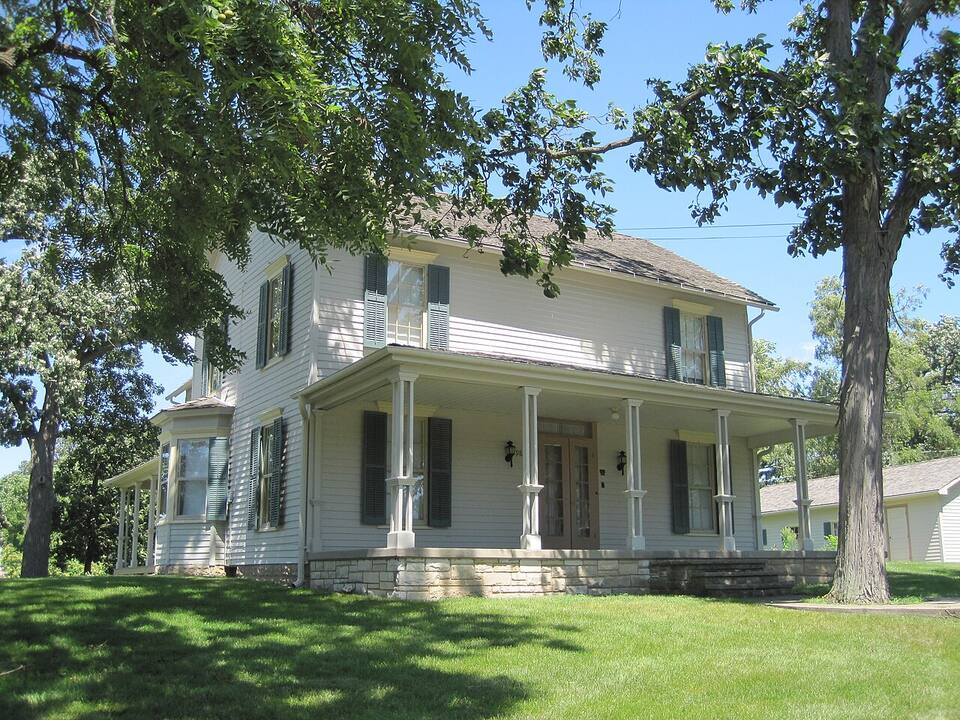
John Humphrey House, Orland Park β€” National Register of Historic Places
Illinois suburban aerial
Illinois prairie farmland
Illinois parkland aerial
The Orland Park Record Β· The Founding Chapter Β· All Sources Public Record

The Founding

From a lone settler on a prairie in 1834 to nuclear reactors in the Palos Hills forest, missile bases on sod farms, a $2.65 billion corporation built in a bungalow basement, and an Italian immigrant slaughtering lambs for railroad men β€” this is the real Orland Park. 192 years. Every family. Every source.

1834
First
Settler
1859
Cemetery
Founded
1942
Nuclear
Reaction
$2.65B
Andrew Corp
Final Sale
3
Killed
1972 Blast
23
Nike Missile
Sites Chicago
↓   scroll to read   ↓
I
Chapter One Β· Orland Memorial Park Cemetery Β· Founded 1859 Β· 153rd Street & West Avenue

The Ground Tells
the Whole Story.

Originally "Cooper Cemetery" β€” the Cooper family homestead was on this exact corner. Now: Orland Memorial Park Cemetery. Five mayors buried here. Pioneers, machine politicians, a $2.65 billion company founder, the man who named Tinley Park β€” all in the same ground. The names on those tombstones are the history of this village.

Arrived 1834 Β· First Settler
Henry Taylor
The First Person Here
Orland Park's very first settler arrived in 1834 β€” on a vast Illinois prairie. Wolf country. Rattlesnake country. No roads, no schools, no stores. Four years before Illinois had a state constitution. He came before the Potawatomi land cessions were even complete. His name is the first on the record.
Settled 1844 Β· Orland Township's First Officials
Ichabod & William Myrick
Buried: Orland Memorial Park Cemetery
Settled on 139th Street west of Wolf Road in 1844. Became Orland Township's first officials. Their names are on tombstones in the same cemetery where the machine mayors β€” the corrupt trustees who came 125 years later β€” were also buried. The honest pioneers and the machine politicians: same ground.
Settled 1850 Β· Cooper Cemetery Is Named For Them
The Cooper Family
The Ground Itself Is Their Gift β€” Original Homestead at 153rd & West Ave
The cemetery is literally on Cooper land. The Cooper homestead was at 153rd Street and West Avenue β€” the corner that became the "Cooper Cemetery" then "Orland Burial Grounds" then Orland Memorial Park Cemetery. In 1882 the Coopers donated land for District No. 9 (later District 135) first schoolhouse at 9773 W. 143rd Street. George "Merrill" Cooper (1917–2006) ran an ice cream parlor at 143rd and Union Avenue, M. Cooper Supply Co., and Cooper Furniture. Thomas E. Cooper, born 1893, served in France in WWI. Howard Cooper Farm: 157th and 94th Avenue. The ground every other pioneer rests in was given by this family.
1846–1921 Β· State House 1870 Β· Senate 1886 Β· Named Orland Park 1879
Senator John Humphrey β€” "Honest John"
First Village President Β· National Register of Historic Places Β· 9830 W. 144th Place
Came from Wisbech, England as a child in 1848. Tried the California Gold Rush. Failed. Came back. Studied law in Chicago. Illinois House 1870, Illinois Senate 1886. Purchased farmland in anticipation of the Wabash Railroad expansion and personally lobbied to name the settlement "Orland Park" in 1879. First village president at incorporation May 31, 1892. His 1881 house: National Register of Historic Places (2005). Buried in Orland Memorial Park Cemetery β€” the same cemetery the machine trustees he would have despised would later enter.
1838–1919 Β· Railroad Agent 1854 Β· BURIED IN ORLAND PARK, NOT TINLEY PARK
Samuel Tinley Sr.
A Whole Town Was Named For Him β€” He Is Not Buried There
First station agent for the Bremen depot on the Chicago and Rock Island Railroad, 1854. Served 26 years. So beloved that in 1890 Postmaster Henry Vogt requested the Post Office change its name from "New Bremen" to "Tinley Park" in his memory. The village incorporated June 27, 1892. His wife Susannah (1836–1925) is buried beside him. The man who gave Tinley Park its name is buried in Orland Park's cemetery, not Tinley Park.
General Store Jan 2, 1898 Β· Treasurer 1929–1994 Β· 65 Years Β· Died 2004 at 97
Franklin Loebe
Born Above the Store Β· Same Day as the San Francisco Earthquake Β· Longest-Serving Official in Illinois History
The Loebe Brothers General Store β€” the first general store in Orland Park β€” opened January 2, 1898 at 14314 Union Avenue. Franklin Loebe was born in an apartment above that store on April 18, 1906 β€” the same day as the San Francisco earthquake. Village Treasurer for 65 years: 1929 to 1994. Believed to be one of the longest-serving officials in Illinois history. The Franklin E. Loebe Recreation Center was named for him. Pekau erased his name. His daughter Priscilla: "The name Loebe is synonymous with Orland Park history."
Village Trustee Β· Fire Protection District Founder Β· First Female Police Matron
Paul & Eleanor Voss
Two Kinds of Service β€” Neither Name Is On A Building
Paul Voss was a longtime village trustee AND a founding trustee of the Orland Fire Protection District β€” the man helped build the two institutions that governed and protected this town. Eleanor Voss was the first female matron of the Orland Park Police Department. Buried here together. The village they helped build grew to 58,000 people. Neither of their names is on a building.
Name on a Tombstone AND a Park
The Schussler Family
Founding Pioneers Β· Schussler Park Β· Now: Michael Schofield II Sports Complex
Schussler is one of the names on tombstones here. It is also the name on a park. Schussler Park is being rebuilt as the Michael Schofield II Sports Complex β€” 20-year partnership with NFL player Michael Schofield III (Carl Sandburg Eagle, 9 NFL seasons) and his wife Kendall Coyne Schofield, Olympic gold medalist in hockey. Pioneer family name and Olympic gold medal. Same park.
Orland Park Nursery Β· Army Veteran Β· Died January 1, 2013 at 84
Charles "Charlie" Novak Jr.
The Nurseryman Β· Asked to Come Home to Be Buried Here
Charlie Novak owned the Orland Park Nursery for decades during the exact years the suburbs were consuming every field around him. U.S. Army veteran. Retired with wife Maryann to Rocky Mount, Missouri near Lake of the Ozarks. When he died January 1, 2013 at 84, he was brought home to Orland Memorial Park Cemetery. Children: Sylvia, Jerry, Johnny, Charles III. Brother Arthur Novak also prominent. Ronald C. Novak β€” 50-year resident and outdoorsman β€” also buried here.
Mayor 1965–1985 Β· 20 Years Β· The Machine
Melvin Doogan
In the Same Ground as John Humphrey and Franklin Loebe
Melvin Doogan ran Orland Park for 20 years. Under his administration: "government by men, not by law." The sewer tollbooth. The developer money. The Rafacz farm annexation that became a mall. Donald Pekau Sr. was his trustee. Doogan is buried in Orland Memorial Park Cemetery β€” in the same ground as John Humphrey, the Myricks, the Coopers, the Tinleys, the Vosses, and Franklin Loebe. The honest and the corrupt. Same dirt.
August 31, 1902 – October 30, 1971 Β· $2.65 Billion Company Β· His Wife Paid for the Log Cabins
Victor J. Andrew
Failed 3rd Grade Twice Β· PhD from U of Chicago Β· Founder Andrew Corporation Β· Buried Here
Failed third grade twice. Homeschooled. Built radios from dump parts. PhD from University of Chicago, 1932. Started Andrew Corporation in a bungalow basement, January 1, 1937. Bought 430 Orland Park acres for $86,000 in 1947. Built a company that sold for $2.65 billion in 2007. His cables monitored nuclear bomb tests. HELIAX coaxial cable, made in Orland Park, became the backbone of global cellular networks. Buried in Orland Memorial Park Cemetery. His wife Aileen's foundation still gives $2.4 million per year to 260 charities. She preserved the Hostert log cabins from her grave.
Incorporated 1946 Β· Tax-Exempt June 1947 Β· $2.8M Annual Giving
Aileen S. Andrew β€” Died 1967 in Australia
President of Andrew Corporation Day One Β· Foundation Gives $2.8M Per Year Still
Victor's wife. Named president of Andrew Corporation on the day it was incorporated in 1947 β€” this was 1947, manufacturing companies did not name women as presidents. She died in Australia during a business trip in 1967. She and Victor created the Aileen S. Andrew Foundation in 1947. EIN 36-6049910. As of 2024: $2,859,245 given to 260 organizations in one year. She paid for the preservation of the Hostert log cabins. She kept Old Orland alive. She is buried in this cemetery. She is still giving.
"
The burial records of the Orland Memorial Park Cemetery are a walk through Orland Park history. Names like Humphrey, Loebe, Myrick, Schussler, Voss, Doogan, Yunker and more include some of the village's early pioneers.
Orland Park History Museum Β· Cemetery Walk Β· October 2018
153rd Street & West 100th Avenue Β· Founded 1859 Β· Five Mayors Buried Here
II
Chapter Two Β· 1937–2007 Β· The Complete Andrew Corporation History

Failed 3rd Grade.
Got a PhD. Built a
$2.65 Billion Company.

Victor "Doc" J. Andrew started in a Chicago bungalow basement in 1937 with some radio antenna parts and tools. He ended up wiring every cellular network on earth. His HELIAX coaxial cable, made in Orland Park, became the standard. His wife Aileen was named President on Day One. His cables monitored atomic bombs. His company employed 4,572 people from an Orland Park campus bought for $200 an acre.

August 31, 1902 β€” Medina County, Ohio Farmhouse
Victor "Doc" John Andrew
Founder Β· Chairman Β· CEO Β· PhD Physics U of Chicago Β· Failed 3rd Grade Twice
Born on a family farm in Medina County, Ohio. Mother was a former one-room schoolhouse teacher. Entered school at six, failed third grade twice, mother pulled him out and homeschooled him. Spent four years "primarily playing, usually alone" in rural Ohio. At 15: first mobile radio serviceman in Wooster, Ohio. At 17: his own amateur radio station, built from discarded parts from the city dump.

BS from College of Wooster 1926. Research at U.S. Naval Laboratory on radio wave propagation. Master's, University of Chicago, 1928. Worked Westinghouse until the stock market crash cost him his job in 1929. PhD in physics, University of Chicago, 1932. Lost two more jobs in the Depression. Quit Doolittle Radio Inc. Took business courses. Started Andrew Company on January 1, 1937 in the basement of his rented home on Chicago's southwest side, near Midway Airport. Illegal under zoning. Nobody enforced it. He met Aileen Sharkey at Fort Monmouth, New Jersey while working for the Army Signal Corps. She became president of the company he named after himself.
Wikipedia Β· Victor J. Andrew Β· International Directory of Company Histories, Vol. 32 Β· St. James Press 2000 Β· Andrew Museum andrewmuseum.com
Named President Day One β€” 1947 β€” Died in Australia 1967
Aileen (Sharkey) Andrew
President, Andrew Corporation Β· Foundation Still Gives $2.8M/Year Β· Buried Orland Memorial Park
Met Victor at Fort Monmouth, New Jersey. Married. Built the company together. When Andrew Corporation incorporated in 1947: Victor was Chairman and CEO. Aileen was named President. This was 1947.

Victor and Aileen adopted two children: Edward John Andrew (later Chairman) and Juanita Andrew Hord. Children accompanied them on international business trips as Victor traveled the world seeking customers. Aileen died in Australia in 1967 during one of those trips. Victor remarried Rose Metz in 1969. Died October 30, 1971 at his Claremont, California home. Buried Orland Memorial Park Cemetery.

In 1947 β€” same year as incorporation and the Orland Park land purchase β€” Victor and Aileen created the Aileen S. Andrew Foundation. EIN 36-6049910. As of fiscal year ending November 30, 2024: $2,859,245 given to 260 charitable organizations. Focus: scholarships for Andrew Corp employee children and local high school graduates, health organizations, youth services, Christian and Protestant churches. Was key contributor to preserving Hostert log cabins and Old Orland historic district. Still operating from 10701 Winterset Drive, Orland Park. Contact: Robert E. Hord Jr. Phone: 708-349-4445.
Candid Foundation Directory EIN 36-6049910 Β· ProPublica Nonprofit Explorer Β· GuideStar Β· Wikipedia Victor J. Andrew
The Complete Corporate Timeline Β· 1937–2007 Β· 70 Years

From Bungalow Basement to $2.65 Billion

1937

The Basement β€” January 1, 1937

34-year-old Victor Andrew starts in the basement of his rented Chicago bungalow, near Midway Airport. Illegal under zoning. A "modest array of tools and equipment." First products: custom phasing, tuning, and transmission line equipment for AM radio broadcasters. Intended to be primarily a consulting firm. WWII changed that.

1941–45

World War II β€” Military Transforms the Company

Wartime ban on broadcast station construction killed consulting. Andrew pivots to manufacturing. Military contracts for coaxial cables and dry air pumps β€” the Air Force used those pumps to pressurize airborne radar pods on bombers flying over Germany and Japan. The company grew faster than ever. Victor moved to larger quarters in the same Chicago neighborhood several times.

1945–47

Nuclear Testing β€” Andrew's Cables Monitor the Bomb

After the war: Andrew Corporation supplied coaxial transmission line used to monitor nuclear blast testing both above and below ground. The cables that Andrew workers made in Chicago were threaded into instrumentation towers at Nevada Test Sites and Pacific Proving Grounds to measure atomic bomb detonations. The Orland Park connection to the nuclear age runs directly through this company.

1947

Incorporated Β· Aileen Named President Β· 430 Acres Β· $86,000

Andrew Corporation incorporated under Illinois law. Victor = Chairman/CEO. Aileen = President. Same year: Andrew buys 430 acres of undeveloped Orland Park farmland for $200/acre β€” $86,000 total. Clear land needed for outdoor antenna testing. Rock Island and Wabash Metra rail lines made the location accessible. Aileen S. Andrew Foundation also created in 1947.

1949

Microwave Antennas β€” Civilian and Military

Andrew begins making microwave antennas for both civilian and military communications. Cold War demand explodes the business. Andrew makes switching devices, waveguides, and high-powered coaxial lines for military radar systems. The company is now on the front line of America's Cold War technological infrastructure β€” based on a former Orland Park farm.

1953

HELIAXβ„’ β€” Made in Orland Park Β· HQ at 10500 W. 153rd Street

HELIAX continuous, semi-flexible coaxial cable goes to market β€” revolutionary product. The corrugated outer conductor provides exceptional shielding and minimal signal loss. HELIAX becomes the dominant coaxial cable for cellular networks, broadcasting, satellite communications, and military systems worldwide. Made in Orland Park. HQ fully establishes at 10500 W. 153rd Street, Orland Park.

1966

Goes International β€” Australia and England Simultaneously

A single British microwave contract requires Australian manufacturing. Andrew enters both markets at once: Andrew Antenna Systems Limited (UK) and Andrew Antennas Proprietary Limited (Australia). Australian division immediately contracts to install microwave equipment along a 1,500-mile route from Adelaide to Perth. Andrew Corporation is now global β€” headquarters: Orland Park, Illinois.

1967–71

Aileen Dies in Australia 1967 Β· Victor Dies 1971 Β· Buried Orland Park

Aileen Sharkey Andrew β€” president since 1947, co-creator of the foundation β€” dies in Australia during a business trip. Victor remarries Rose Metz in 1969. Dies October 30, 1971 at his Claremont, California home. C. Russell Cox becomes president. Edward J. Andrew Sr. (Victor's son) becomes chairman. Victor buried: Orland Memorial Park Cemetery, Orland Park, Illinois.

1972

AT&T Breakup β€” Andrew Owns 60% of World Microwave Market

Companies allowed to compete with AT&T in long-distance. MCI, Sprint, and "Other Common Carriers" need microwave antennas. Andrew holds ~60% of the world market share in microwave antenna systems. Growth: up to 25% per year, 1972–1984. The suburb of Orland Park is making the communications infrastructure that connects America.

1977

Victor J. Andrew High School Opens β€” District 230

Third District 230 high school opens in Tinley Park, named Victor J. Andrew High School. Mascot: the Thunderbolts β€” to commemorate Andrew Corporation's lightning-bolt communications technology. A public school named for a private company's founder. The suburb's acknowledgment of what this man meant to the southwest suburbs.

1980

Goes Public Β· NASDAQ: ANDW Β· Sales: $89 Million

Andrew Corporation goes public on NASDAQ (ANDW). Andrew family retains substantial stake. 4,572 employees β€” and their families β€” hold stock options in one of the dominant communication infrastructure companies in the world. Sales in 1980: $89 million, two-thirds domestic.

1984

Sales Exceed $200 Million Β· Unchallenged World Leader

Record revenues. Andrew is the acknowledged world leader in microwave technology, unchallenged in the United States, Canada, and Australia. The company is engineering communications networks across 6 continents from its Orland Park campus.

1985

Fiber Optics Disruption β€” Abrupt Sales Decline

Fiber optic cables begin superseding microwave technology. Sales decline abruptly. CEO Floyd English (president since 1983) had worried for years about over-focus. The pivot begins: military acquisitions, cellular antenna pivot, computer networking.

1986–94

RADIAX, English Channel Tunnel, Moscow Subway, Gulf War

Develops RADIAX slotted cable β€” eliminates cellular dead zones in tunnels and subways. Wins contract to wire the English Channel Tunnel. Builds fiber optic networks in Moscow and St. Petersburg subway systems. DRAGON FIX radio interceptors used in the Persian Gulf War, 1991. Andrew Corporation, headquartered in Orland Park, is now wiring the former Soviet empire and fighting wars.

1995

Largest Order in History β€” $48.6 Million Β· Hong Kong Metro

$48.6 million contract to expand cellular telephone and paging systems in the Hong Kong Metro. Largest single order in Andrew's history. The suburb of Orland Park, Illinois is wiring Hong Kong's subway. Revenues surge 20% as PCS (Personal Communication Systems) emerge.

1997–99

Peak Revenue $869.5 Million β€” Then the Telecom Bust

Revenue peaks at $869.5 million in 1997. Declines to $852.9M (1998) and $791.8M (1999) as U.S. wireless market slows and global economic crisis hits Russia and Brazil. Two major restructurings. 880 employees cut. Orland Park employees who built their lives around this company watched their stock options fall.

2003

Allen Telecom (~$500M) + Celiant (~$470M) Acquired

Allen Telecom: Dallas antennas, Lynchburg geolocation, Amesbury filters. Celiant: power amplifiers. Combined: leading global supplier of wireless subsystem infrastructure. Andrew Corporation is now larger than at any point in its history.

2005

Sells Orland Park Campus to Kimball Hill Homes β€” $28.5 Million

The 104-acre campus β€” built on farmland bought for $86,000 in 1947 β€” sold to Kimball Hill Homes for $28.5 million. Phase 1 closes in 2006. Phase 2 contracted for $16.5 million. Kimball Hill fails to close. They go bankrupt in 2008. The land that hosted nuclear-monitoring cables and HELIAX production sits in bankruptcy court. The company that employed 4,572 people has left Orland Park.

2006

Corporate Headquarters Moves to Westchester, IL

The address that was 10500 West 153rd Street, Orland Park, Illinois for 53 years is abandoned. 150 corporate employees move to Westchester. Orland Park loses its anchor tenant after half a century.

2007

CommScope Acquires Andrew Corporation β€” $2.65 Billion

CommScope completes the $2.65 billion acquisition of Andrew Corporation on December 27, 2007. Cash: $13.50/share + $1.50 CommScope stock. The 430 acres bought for $86,000 in 1947 ($200/acre) became part of a company worth $2.65 billion. Victor J. Andrew β€” Ohio farm boy, failed third grade, bungalow basement, January 1, 1937 β€” built $2.65 billion worth of value from the prairie southwest of Chicago. He died in 1971. He is buried in Orland Park.

Two Foundations Β· Still Operating Β· Still Giving
The Andrew Foundations
Aileen S. Andrew Foundation (1947) Β· Andrew Family Foundation (1993)
AILEEN S. ANDREW FOUNDATION (EIN 36-6049910): Incorporated 1946, tax-exempt since June 1947. Contact: Robert E. Hord Jr., 10701 Winterset Drive, Orland Park IL 60467. 708-349-4445. Fiscal year ending November 30, 2024: gave $2,859,245 to 260 charitable organizations. Focus: scholarships for Andrew Corporation employee children and local high school graduates; health; youth services; Christian and Protestant churches. Key contributor to Hostert log cabins and Old Orland preservation. The woman who died in Australia in 1967 is still giving nearly $3 million a year to this community from her grave in Orland Memorial Park Cemetery.

ANDREW FAMILY FOUNDATION (EIN 36-3926511): Founded 1993 by Edward J. Andrew Sr. (Victor and Aileen's son) and wife Edith G. Andrew (daughter of Kathryn C. and Burton S. Grant) and their five children: Laurel J. Andrew, William V. Andrew, Richard G. Andrew, Edward J. Andrew Jr., Kathryn A. Willett. Assets ~$8.7 million. Grants $100–$127,300. Focus: education, humanitarian efforts, arts, underresourced communities, natural environment. Illinois, Nevada, Florida.
ProPublica Β· Candid Foundation Directory Β· Instrumentl Β· GuideStar 990s Β· Foundationsource.com
1937
Founded in Basement
Chicago bungalow near Midway Airport Β· Illegal under zoning
430
Acres Bought 1947
$200/acre Β· $86,000 total Β· For outdoor antenna testing on Orland Park prairie
HELIAX
Made in Orland Park 1953
The coaxial cable that became the backbone of every cellular network worldwide
60%
World Market Share
Microwave antenna systems in peak years
4,572
Employees at Peak
1999 Β· Thousands of Orland Park families tied to this company
$2.65B
CommScope Acquisition 2007
$200/acre farmland became part of a $2.65 billion deal
260
Charities Per Year
Aileen S. Andrew Foundation Β· $2.8M annual giving Β· Still operating from Orland Park
☒
Monitored Nuclear Tests
Andrew cables used to monitor atomic bomb detonations above and below ground
III
Chapter Three Β· 1942–1956 Β· The Bomb Was Next Door

The World's First Nuclear Reaction
Happened Here.

Under a football stadium named for the same coach whose name is on a Palos Hills high school serving Orland Park kids. Then they moved the reactor to the Palos Forest Preserve β€” 20 miles from downtown Chicago, on the border of Orland Park. The company on Orland Park farmland monitored the nuclear tests. The Army condemned a sod farm next door for a missile base. All of this happened in your suburb.

1892
Amos Alonzo Stagg arrives at the brand-new University of Chicago. Schedules the first football practice for the same day the school opens, October 1, 1892. Coaches there 40 years. His name goes on Stagg Field β€” the football stadium where the atomic age will begin 50 years later.
Dec 2,
1942
3:25 PM: Enrico Fermi and 49 scientists achieve the world's first controlled, self-sustaining nuclear chain reaction β€” underneath the west viewing stands of Stagg Field at the University of Chicago. A converted squash court beneath a football stadium in the middle of a major American city. Message to Washington: "The Italian navigator has landed in the New World." The atomic age begins under bleachers named for a football coach whose name is on a high school serving Orland Park students.
1943
The nuclear experiments are deemed too dangerous to continue in a major city. The Army Corps of Engineers leases 1,025 acres in the Palos Forest Preserve, Cook County β€” 20 miles southwest of Chicago, bordering the Orland Park community. Site A (19 acres for laboratories and reactor research) and Plot M (radioactive waste burial). Chicago Pile-1 moves to this forest.
1944
The world's first heavy-water moderated nuclear reactor goes critical at the Palos Park site in spring 1944. Manhattan Project scientists design plutonium production reactors for Hanford, Washington from this location. The forest preserve next to Orland Park is the laboratory for the atomic bomb program.
1945–47
Andrew Corporation β€” on Orland Park farmland β€” supplies coaxial transmission line used to monitor nuclear blast testing above and below ground. The cables were made by workers driving to a factory on 153rd Street in Orland Park. The suburb that became a shopping mall was wired into the nuclear weapons testing program.
Jul 1,
1946
Argonne National Laboratory formally chartered β€” America's first national laboratory β€” at the Palos Hills forest site. Mission: "cooperative research in nucleonics." Named after the surrounding Argonne forest (named after the WWI Battle of the Argonne Forest). The reactor that started under a Chicago football field is now a federal institution in the forest next to Orland Park.
1947
Victor Andrew buys 430 acres of Orland Park farmland for $86,000. He is buying land adjacent to the Argonne Laboratory's operational zone. His company already makes the cables that monitor nuclear tests. He is planting his antenna factory in the same southwest suburban ecosystem where the Manhattan Project's reactor has operated for four years.
1950–56
Nike Missile Base C-54 β€” Orland Park. The Army condemns land for the Nike missile site as part of the Chicago-Gary Defense Area β€” 23 missile bases ringing the metro to shoot down Soviet nuclear bombers. Base C-54 headquarters: the 13th Antiaircraft Artillery Missile Battalion, Nike-Ajax. National Archives Case 55C603: "117.7449 acres of land and Andrew Rafacz, et al." β€” the same Rafacz family whose sod farm became Orland Square Mall.
1956
Site A at Palos Hills closes. The nuclear reactor and radioactive waste from the Manhattan Project experiments are buried at Plot M β€” capped by concrete. They remain underground today. Forest preserve markers discourage digging. A buried reactor, in the forest, on the edge of Orland Park. The nuclear material has been in Cook County longer than most of the suburb's houses.
1964
Amos Alonzo Stagg High School opens in Palos Hills, Illinois β€” serving communities including Orland Park. Part of Consolidated High School District 230 β€” same district as Carl Sandburg and Victor J. Andrew. Named for the man whose football field hosted the first nuclear reaction in 1942. The football coach, the bomb, the suburb, the school.
Today
Argonne moved to its permanent site in Lemont, Illinois β€” still Orland Park's backyard. 1,500 acres. 3,500 scientists. National research facilities including the Advanced Photon Source. The nuclear legacy that began under Stagg Field in 1942 now anchors the southwest suburban scientific economy.

The Stagg Connection β€” One Name, Two Histories

Amos Alonzo Stagg was born August 16, 1862 in West Orange, New Jersey. Yale All-American 1889 β€” one of the first ever named. Coached the University of Chicago Maroons from 1892 to 1932, 40 years. Also coached basketball and baseball simultaneously. Died March 17, 1965 at age 102 β€” just one season before the first Super Bowl.

Under his bleachers β€” the west stands of Stagg Field at the University of Chicago β€” the Manhattan Project built Chicago Pile-1, the world's first nuclear reactor. On December 2, 1942, Enrico Fermi's team achieved criticality. The message sent to James Conant in Washington: "The Italian navigator has landed in the New World."

A high school in Palos Hills, Illinois β€” serving Orland Park students β€” is named Amos Alonzo Stagg High School. Consolidated High School District 230, same district as Victor J. Andrew High School, named after the man whose Orland Park company monitored nuclear tests. The NCAA Division III national championship game is called the Stagg Bowl. The Big Ten football trophy is the Amos Alonzo Stagg Championship Trophy. The spot where the atomic age began is named after the football coach. The school serving Orland Park's children is named after him too.

Stagg Field 1892β†’ Chicago Pile-1 Dec 2 1942β†’ Palos Hills Reactor 1943β†’ Argonne Nat'l Lab 1946β†’ Andrew Corp Nuclear Monitoring 1945–47β†’ Nike Base C-54 Orland Park 1956β†’ Stagg HS Palos Hills 1964β†’ Andrew HS Tinley Park 1977β†’ Rafacz Land β†’ Orland Square Mall 1976
IV
Chapter Four Β· 1916–1950s Β· From Calabria to a Limestone Building

The Man Who Slaughtered
a Lamb for a Railroad Man

Fiore Chiappetti came from Calabria, Italy in 1916. He worked the railroad. One evening he slaughtered a lamb for his family. A coworker asked if he could do the same. Then another. Then another. By the time the chain reaction ended, he owned a 400-acre Orland Park farm and was running Chicago's last major slaughterhouse β€” 3,000 lambs per week.

1916 β€” Calabria, Italy β†’ Chicago
Fiore "Fioremante" Chiappetti
Italian Immigrant Β· Railroad Worker Β· Butcher Β· Orland Park Farmer
Fiore Chiappetti immigrated from Calabria, Italy in 1916. Railroad work. After shifts, he occasionally slaughtered a lamb for his family. A coworker asked. Then another. He quit the railroad and opened a small butcher shop on Taylor and Jefferson Street in Chicago with his brother Salvatore. The shop grew β€” Polk Street, then Halsted Street, into the world's largest meatpacking district.

In 1934 β€” during the Depression β€” the Stahulak family (Austro-Hungarian immigrants) sold their Orland Park farmland to Orland State Bank. The same Orland State Bank that would later build without permits while trustees looked the other way in 1975 β€” "a curious system of government by men, not by law." Bank clerk Herman Gee sold the land to Fiore. Fiore and brother Samuel bought a 400-acre Orland Park farm.

On the farm: a limestone building constructed by Joseph Rust. Fiore converted it to a slaughterhouse β€” limestone kept it cool in summer. Processed lambs, calves, and cattle. Meat to Union Stockyards, Chicago. Bones to Darling & Co. for fertilizer.
Village of Orland Park Heritage Sites Β· orlandpark.org Β· Perishable News 2025 Β· AP Wire 2007
1940s–2007 Β· Chicago's Last Major Slaughterhouse
Chiappetti Lamb and Veal
4 Generations Β· 130 Employees Β· 3,000 Lambs Per Week
The Orland Park farm was sold in the 1950s to Andrew Corporation β€” it became part of the 430-acre campus. The Chiappetti family took the slaughterhouse to Chicago's South Side stockyards district. Chicago's last major slaughterhouse: 130 employees. 3,000 lambs and 400 veal calves per week. Shipping to Jewel, Dominick's, Randy's Market in Orland Park, and fine restaurants nationwide. Hides to tanneries worldwide. Intestines for sausage casings and surgical sutures.

Dennis Chiappetti (3rd generation) still lives in Orland Park. He created a signature meat seasoning in 2006. When the AP asked Franco Chiappetti (4th generation) in 2007: "The big guys used to refer to the smaller guys as alley rats. It's funny that we stand as the only rat in the city."

The limestone Chiappetti Slaughterhouse building still stands in Orland Park as a heritage site.
AP Wire March 12 2007 Β· Patch Orland Park June 4 2021 Β· orlandpark.org heritage sites
Stahulak Farm→ Orland State Bank 1934→ Chiappetti Farm 1934→ Andrew Corp 1950s→ Kimball Hill 2005→ Bankruptcy 2008

The Orland State Bank that acquired this land from the Stahulaks in 1934 is the same bank that built without a permit in 1975 β€” "government by men, not by law." Same institution. Two scandals. 40 years apart.

V
Chapter Five Β· March 6, 1972 Β· Orland Park Β· Felt 25 Miles Away in Gary, Indiana

The Explosion That
Shook Gary, Indiana.

At midafternoon on Monday, March 6, 1972, a fireworks factory on 104th Avenue in Orland Park detonated. Three people died. Windows shattered 12 miles away on Chicago's South Side. 2,000 schoolchildren went to basements. The owner made the White Sox exploding scoreboard.

Monday, March 6, 1972 Β· Midafternoon Β· 104th Avenue Β· Orland Park, Illinois

Melrose Display Fireworks Company
The Explosion That Changed Everything

A series of explosions leveled a two-mile-square fireworks manufacturing complex, killing three persons and injuring 14 β€” including two policemen in early rescue attempts. Firemen from 12 communities responded and took several hours to control fires. Police evacuated homes within a two-mile radius and barricaded roads within five miles.

The explosions were heard and felt as far as Gary, Indiana β€” 25 miles away. Windows blown out and walls cracked up to 12 miles away on Chicago's South Side. Three buildings severely damaged. Utility lines within a half mile destroyed. A full work force of approximately 100 workers was on duty. Three bodies found; two more reported missing.

2,000 pupils in five Orland Park schools were shepherded to school basements when the blast blew out windows. District 135 Asst. Superintendent Robert Cullen awarded students "gold stars" for behavior. Schools dismissed. Insurance adjusters and fire marshalls investigated next morning.

Firefighter Art Granat: "It looked like a war zone. There was not much fire. Everything was all scattered. It was more of a search and rescue."

Owner: Anthony Cartolano. A relative said Cartolano "barely got out alive." His great-grandfather had carried the pyrotechnic craft from Italy to America at the turn of the 20th century, settling in Melrose Park, Illinois. Anthony's father collaborated with the Chicago White Sox to create the exploding scoreboard in 1960 β€” celebrated on the Sports Illustrated cover, July 4, 1960. The Cartolanos made fireworks for Comiskey Park. After the explosion, Melrose Pyrotechnics relocated to La Porte, Indiana β€” where military munitions bunkers provided storage. Today Melrose Pyrotechnics still produces the White Sox fireworks. The tradition that destroyed Orland Park in 1972 lights up Guaranteed Rate Field tonight.
3
Killed
14
Injured
12
Communities
Responded
25mi
Felt in
Gary IN
2,000
Students to
Basements
12mi
Windows
Broken
2mi
Evacuation
Radius
5
Schools
Evacuated

Sources: Daily Illini March 7 1972 (AP Wire) Β· Suburbanite Economist March 8 1972 Β· Firehouse Magazine July 2019 Β· Washington Post archive Β· Wikipedia List of Fireworks Accidents Β· Melrose Pyrotechnics company history Β· ABC7 Chicago June 30 2020

VI
Chapter Six Β· 1956–1958 Β· Cold War in the Sod Farm

Nuclear Missiles Were Aimed at Soviet
Bombers From Orland Park.

As Victor Andrew's factory made cables monitoring nuclear tests, and as Argonne buried its reactor next door, the U.S. Army condemned Orland Park farmland β€” including Rafacz family land β€” for a Nike missile battery. 23 bases ringed Chicago. Base C-54 was Orland Park's. The sod farm family had land condemned for missiles AND sold their other farm for the mall.

Nike Missile Base C-54 Β· Orland Park Β· 1956–1958
13th Antiaircraft Artillery Missile Battalion
Nike-Ajax Β· Part of 23-Site Chicago-Gary Defense Area
Project Nike was America's first operational surface-to-air missile defense system β€” deployed to intercept Soviet nuclear bombers attacking American cities. The Army built 23 Nike installations ringing the Chicago-Gary metropolitan area. Site designations included: C-03 Montrose/Belmont, C-40 Burnham Park, C-41 Jackson Park, C-44 Hegewisch, C-51 Worth/Palos Heights/LaGrange, C-54 Orland Park, C-61 Argonne National Laboratory, C-70 Naperville, C-80 Arlington Heights, C-98 Fort Sheridan.

In 1956–1957, the 13th Antiaircraft Artillery Battalion was headquartered at Nike Missile Base C-54 in Orland Park, serving as a Nike-Ajax battalion. July 16, 1956: designation changed to 13th Antiaircraft Artillery Missile Battalion, Nike-Ajax. Inactivated September 1, 1958. Later converted to a civil defense center.
The Military Standard Β· Nike Missile Database Β· allworldwars.com Β· themilitarystandard.com/missile/nike/chicago-il.php
National Archives Chicago Β· Case 55C603 Β· Cook County
Rafacz Land Condemned for Nike C-54
Same Family Β· Sod Farm Became the Mall Β· Land Also Condemned for Missiles
National Archives Chicago Nike Missile Site Finding Aid: "117.7449 Acres of Land, more or less, situate in the County of Cook, State of Illinois, and Andrew Rafacz, et al., Case Number 55C603."

The Rafacz family β€” whose snow removal contract with Orland Park was documented December 1974, whose 230-acre sod farm at the NE corner of 151st and LaGrange Road became Orland Square Mall when the trustees approved the Urban Investment annexation in 1971 β€” also had land condemned by the U.S. Army for Nike Missile Base C-54.

The family that literally grew the grass for the suburb had their land condemned for nuclear missiles AND sold their sod farm for the mall. The trustee vote to annex the Rafacz farm β€” the vote Donald Pekau Sr. participated in β€” is the vote that made the mall possible.
National Archives Chicago Β· Finding Aid: Nike Missile Sites Β· Record Group 338 Β· Location 351/917865
VII
Chapter Seven Β· 1860–1924 Β· What They Built Before the Machines Came

The Farms, the Church,
the Cabins in the Woods.

The Stellwagen family farmed 160 acres for eight generations before selling to the village in 2002. A Luxembourg parish held its first Mass in a 20x30-foot cabin in 1867 and now has 15,000 members. The Boley Farm β€” saved from townhomes by a mayor who understood history. All of this before the machine politics. Before the annexations. Before the mall.

1860 β€” Eight Generations β€” 2002 β†’ Village Β· Landmarks Illinois 2019
Stellwagen Farm
17701 S. 108th Avenue Β· Only Original Farmstead Left in Orland Park
Philip Stellwagen was heading west when his wagon axle broke in Illinois. He stopped in Homer Township to find a blacksmith, liked Illinois, and stayed. In 1859, Philip purchased two 80-acre tracts in Orland Township for his son Mathias and new bride Margareth. Built a log cabin on St. Francis Road. Eight generations of the Stellwagen family farmed this land. In 2002, Harwood Stellwagen sold it to the Village of Orland Park's Open Lands Program β€” his dream to preserve the heritage. Only original farmstead remaining in the village. Glazed block silo restored 2010. Five-year restoration completed 2013. Landmarks Illinois 2019 Award. Betty Stellwagen Maue: "It was a joy to have grown up on the farm and to be able to share a little bit of that."
Oldest Existing Farm in Orland Park Β· Buildings 100+ Years Old Β· Saved 2001
Boley Farm
151st Street West of 80th Avenue Β· $560,000 Β· Saved from Townhomes
Orland Park's oldest existing farm. Buildings more than 100 years old. Targeted for multifamily residential development β€” townhomes and condominiums. Mayor Dan McLaughlin created the Open Lands Program in 1995 and in June 2001 the village purchased the 5.8-acre Boley Farm for $560,000 from Glen Boley. McLaughlin: "Each one is 100 years old, and each had its own individual purpose... not only saving a piece of open space but a historical piece of property for Orland Park." Village agreed Glen Boley could continue farming during his lifetime. Now leased to Dean's Greens for seasonal farm stands.
Founded September 29, 1867 Β· 20x30 Foot Cabin Β· Now 15,000 Members
St. Michael Catholic Church
14327 S. Highland Avenue Β· Luxembourg Immigrants Β· One of Oldest Parishes in Archdiocese of Chicago
Founded by German-speaking Luxembourg immigrant families. First Mass: September 29, 1867 β€” the Feast of St. Michael the Archangel β€” in a 20-by-30-foot wood cabin on land donated by Matthias Wagner near 159th and Will-Cook Road. That site became St. Michael Cemetery. John Jungles donated farmland at 151st and Will-Cook Road in Goodings Grove for a white frame church and school. When the railroad came through, Goodings Grove dried up and Orland Park grew. The parish moved. August 10, 1924: first Mass at 143rd and Highland Avenue, which had been pasture land. Today: more than 15,000 members. Once the largest parish in the Archdiocese of Chicago. 150th anniversary celebrated 2017.
~1850 Β· German Immigrants Β· Relocated to Humphrey Woods Park 1980s
Hostert Brothers Log Cabins
Jacob & Bernard Hostert Β· Bernard: Mexican-American War Veteran Β· Preserved by Aileen S. Andrew Foundation
Jacob and Bernard Hostert emigrated from Germany, settled near Homer/Orland around 1850. Bernard fought in the Mexican-American War before returning to build his cabin at 159th and Will-Cook Road. Jacob followed. One-room log cabins, raised families. Survived until the 1980s, when the Orland Historical Society relocated and restored them to 147th and West Avenue in Humphrey Woods Park. The Aileen S. Andrew Foundation was a key financial contributor to the preservation. The woman who died in Australia in 1967 β€” buried in Orland Memorial Park Cemetery β€” paid for 19th century log cabins to survive into the 21st century.
Built 1898 Β· Queen Anne Style Β· National Register of Historic Places 1988
Twin Tower Sanctuary
9967 W. 144th Street Β· Architect William Arthur Bennet
The Twin Tower Sanctuary β€” the Old Sanctuary of the United Methodist Church β€” completed 1898, six years after Orland Park's incorporation. Queen Anne style. Architect William Arthur Bennet. National Register of Historic Places, 1988. The church served the village's large Methodist population β€” the English Protestant immigrant community balancing the German Catholic community of St. Michael's. Two great immigrant faith traditions, side by side on the same prairie, both still standing.
Old Orland Historic District Β· 14314 Union Avenue Β· January 2, 1898
Loebe Brothers General Store
First General Store in Orland Park Β· Franklin Born Above It 1906 Β· Same Day as SF Earthquake
The Loebe Brothers General Store opened January 2, 1898 at 14314 Union Avenue β€” the first general store in Orland Park. John Loebe and Uncle Albert operated it for 53 years. Franklin Loebe was born in an apartment above the store on April 18, 1906 β€” the same day as the San Francisco earthquake. He served 65 years as Village Treasurer. The building is part of the Old Orland Historic District and still stands on Union Avenue. Pekau erased Franklin's name from the Recreation Center. The Dodge administration is restoring it.
VIII
Chapter Eight Β· 1965–2025 Β· The Machine and What It Did to the Founding

After 130 Years of Settlers,
the Machine Arrived.

Henry Taylor arrived in 1834. For 131 years, families came, farmed, worshipped, and built. Then in 1965, Melvin Doogan took power and ran the village for 20 years. His trustee Donald Pekau Sr. disappeared when the scandal broke in 1975. His son Keith Pekau became mayor in 2017 and lost in 2025. The families in that cemetery gave this village its soul. The machine tried to take it. Jim Dodge gave it back.

"
A curious system of government by men, not by law, has come to light in Orland Park... The situation mocks justice.
Tinley Park Star/Tribune Β· December 21, 1975 Β· Page 12
The definitive public exposure of the Doogan machine
newspapers.com/image/537451454
1969–1975 Β· Under Doogan Β· Disappeared as Scandal Broke
Donald Pekau Sr.
Zoning Board β†’ Trustee β†’ Vanished December 1975
First elected April 15, 1969. Zoning Board before that. Re-elected April 20, 1971. On the board when the Rafacz farm was annexed. On the board through the developer pay-to-play era. On the board when Orland State Bank built without a permit while trustees looked away. November 1975: called both "ex-trustee" AND "still on board" in the same article β€” the same month the scandal broke publicly. His son Keith would later claim he was "voted out because of growth and Orland Square." The dates match no election. He vanished as it broke.
Chicago Tribune Apr 16 1969 Β· Tinley Park Star/Tribune Nov 27 1975 Β· Dec 21 1975
2017–2025 Β· Son of Donald Pekau Sr. Β· Now in Colorado
Keith Pekau
Mayor Β· 19 Documented Accusations Β· Lost 57%–43% Β· Court TRO
$33 million to a campaign donor with no collateral. Ethics rules repealed while under investigation. Village manager fired for commissioning an investigation. Arab American residents told to "go to another country" β€” AG ruled OMA violated. Removed Frederick Owens' name from Village Hall and replaced with his own. Court restraining order for publishing confidential village documents. Defeated April 1, 2025: 9,500–6,940 (57%–43%). Every Pekau trustee candidate lost. Moved to Colorado. Still attacking Dodge from out of state.
DCCC Research Book 2022 Β· IL AG Advisory Opinion July 2024 Β· Cook County Court TRO Aug 2025 Β· Multiple Patch and Regional News sources
"
Welcome to the Frederick T. Owens Village Hall. That sign's going to be moving back soon. Today's a new day for Orland Park, and it's a very clear demarcation point in our history.
Mayor Jim Dodge Β· Election Night, April 1, 2025
57%–43% Β· 9,500 votes to 6,940 Β· Every Pekau trustee candidate defeated
October 26, 2025: Frederick T. Owens Village Hall formally rededicated Β· 100+ family members and residents attended